Beyond Solar Panels: What Actually Makes a Solar Energy System Work?
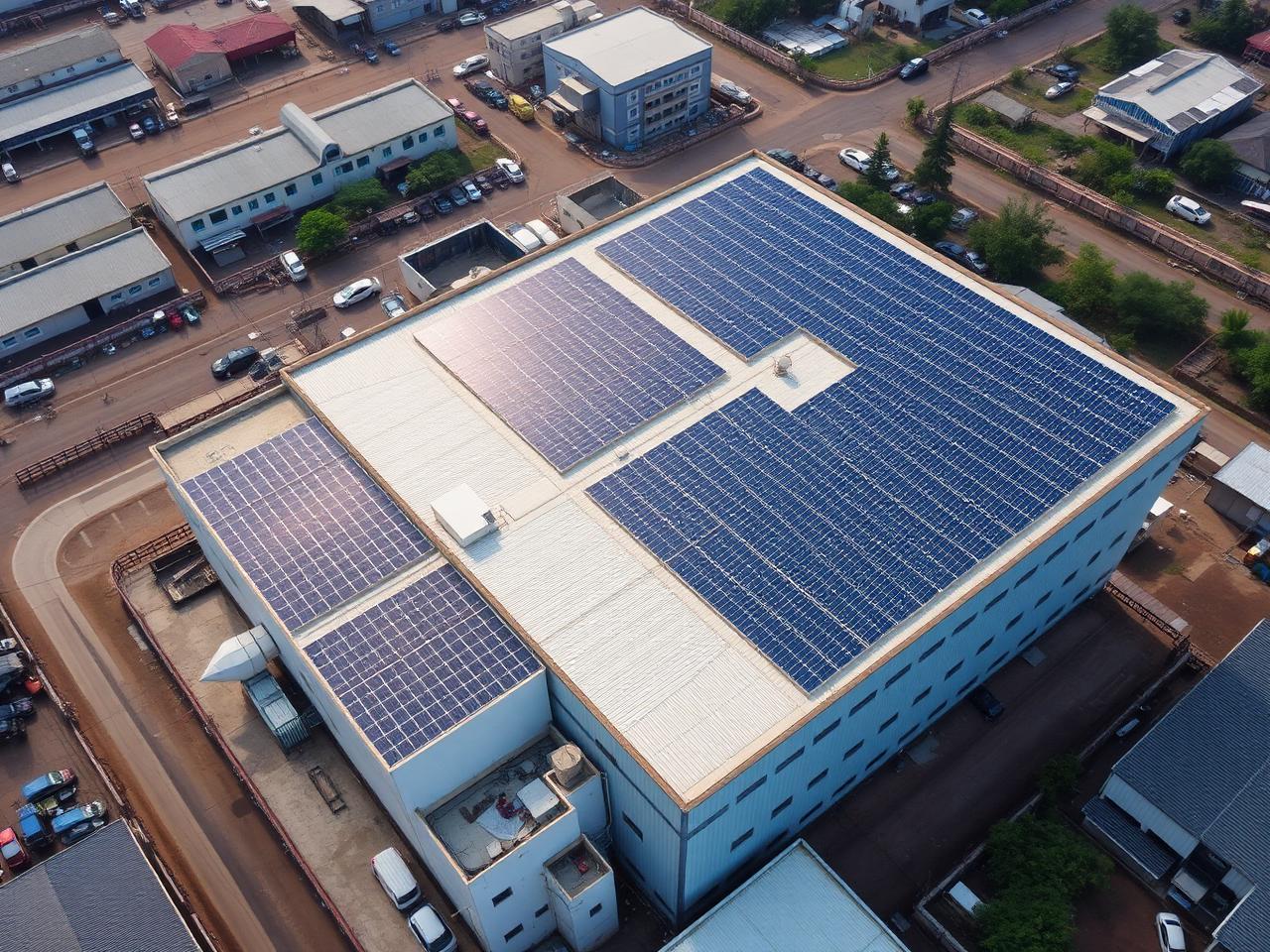
When people hear the words "solar energy," the first thing that usually comes to mind is the solar panel. And that makes sense.
Solar panels are the most visible part of a solar installation. You see them on rooftops, businesses, and open spaces, collecting energy from the sun and turning it into electricity.
But here is something many people do not realize: solar panels alone do not make a solar energy system work.
A reliable solar system is made up of several components that must work together. These include solar PV panels, inverters, batteries, protection equipment, mounting structures, and monitoring or energy-management systems.
The quality, compatibility, and installation of these components can determine whether a system performs reliably for years or consistently underperforms.
Think of a solar system as a team. Every component has a different job, but they all need to work together to deliver reliable power.
1. Solar PV Panels: Where the Energy Begins
Solar panels are where the process starts. Inside each panel are photovoltaic (PV) cells. These cells capture sunlight and convert it into direct current (DC) electricity. Several cells make up a panel, while multiple panels can be connected to form a larger solar array.
However, choosing solar panels is not simply about looking at their wattage. A panel's advertised power output is measured under specific test conditions. In real life, its performance can change depending on sunlight intensity, temperature, shading, panel orientation, dirt, and other system losses.
This is especially important in hot climates. Solar panels generally become less efficient as their operating temperature increases. Shading can also reduce the output of part of a solar array, depending on how the panels are connected and how the system is designed.
What should customers consider? Instead of asking only, "How many panels am I getting?", customers should ask about:
- Panel efficiency and quality
- Warranty and expected lifespan
- Performance in hot conditions
- Expected performance over time
- How the panels will be positioned and connected
The goal is not simply to install more panels. The goal is to install the right solar array for the customer's energy needs.
2. Inverters: The System's Power Manager
Solar panels produce DC electricity, but most homes and businesses use appliances that operate on alternating current (AC). This is where the inverter comes in. It converts the electricity produced by the solar panels into electricity that appliances can use.
Modern inverters can do much more than simply convert electricity. For example, a hybrid inverter can manage power from the solar panels, batteries, and grid. It can determine where energy should go depending on what the system needs at a particular time.
This makes the inverter one of the most important parts of the system. Choosing an inverter based only on its advertised capacity can cause problems. Its solar input capacity, voltage range, battery compatibility, and ability to handle appliances with high starting power are also important.
A poorly selected inverter can lead to system shutdowns, reduced solar utilisation, poor battery performance, or difficulty powering certain appliances.
Customers should therefore ask about the inverter's power rating, solar input capacity, battery compatibility, protection features, efficiency, and warranty.
3. Batteries: Saving Energy for Later
Solar panels produce electricity when the sun is available, but people often need electricity when the sun is not shining. For example, a home may use more electricity in the evening, while a business may need backup power during a grid outage.
This is where batteries become important. They store energy so it can be used later.
Battery capacity is usually measured in kilowatt-hours (kWh). This tells you how much energy a battery can store. However, the advertised capacity does not always equal the amount of energy the customer can actually use.
There is a difference between nominal capacity and usable capacity. Factors such as the battery's permitted depth of discharge, operating conditions, and system controls affect how much energy can be used.
Battery chemistry also matters. Lithium-based technologies, including lithium iron phosphate (LFP), are widely used in modern energy-storage systems. A Battery Management System (BMS) is also important because it monitors the battery and helps manage charging, discharging, and protection.
A poorly selected battery may provide less backup time than expected, degrade faster, or struggle to supply the required load.
Customers should therefore consider usable capacity, discharge power, battery chemistry, expected lifespan, operating conditions, warranty, and inverter compatibility.
4. Protection and Safety: Keeping People and Equipment Safe
Some of the most important parts of a solar system are also the ones customers may never notice. Solar installations require appropriate electrical protection on both the DC and AC sides.
Depending on the system, this may include circuit breakers, fuses, isolators, surge protection devices, and proper earthing. These components help protect people, equipment, and the installation from electrical faults and voltage surges. They also allow equipment to be safely disconnected during maintenance or emergencies.
Good installation practices are just as important as the equipment itself. Problems such as undersized cables, poor connections, inadequate protection, or improper earthing can contribute to overheating, equipment damage, and electrical hazards.
Customers should not simply ask whether a system has "protection." They should ask what protection is included, where it is installed, how the system is earthed, and how equipment can be safely isolated.
5. Mounting Structures: Keeping the Panels Secure
Solar panels are designed to stay outdoors for many years, so they need a strong and suitable mounting structure. Mounting structures secure panels to a roof, carport, or ground-mounted framework while keeping them properly positioned.
The structure needs to account for factors such as wind, roof condition, corrosion, and the way the panels are attached. For rooftop installations, the roof should be assessed to ensure it can support the system. Where the installation requires roof penetrations, proper waterproofing is also important.
A high-quality solar panel mounted on an unsuitable or poorly installed structure can become a long-term maintenance or safety problem.
So, when buying solar, don't just ask about the panels. Ask what is holding them in place.
6. Monitoring and Energy Management: Knowing How Your System Is Performing
Installing a solar system is only part of the journey. You also need to know how well it is performing.
Modern monitoring systems can show information such as solar energy production, battery level, energy consumption, grid usage, and system faults. This can help customers identify problems early. For example, if a system that normally produces a certain amount of energy suddenly produces much less, monitoring can help show that something may need attention.
For larger commercial systems, Energy Management Systems can go further by coordinating solar generation, battery storage, grid supply, and energy loads according to the customer's needs.
In simple terms, monitoring helps you know what your solar system is doing instead of simply hoping it is working.
The Bigger Picture: Everything Has to Work Together
The most important thing to understand is that these components do not work independently.
The panels generate electricity.
The inverter converts and manages it.
The battery stores energy for later use.
The protection equipment helps keep people and equipment safe.
The mounting structure keeps the panels secure.
And the monitoring system helps you track performance.
If one component is poorly selected, it can affect the performance of the entire system.
That is why solar system design should begin with the customer's actual energy needs, rather than simply starting with a particular panel, inverter or battery.
A home, hospital, office, factory and retail shop may all need solar, but their energy requirements can be very different. Some may use more power during the day. Others may need more backup at night. Some equipment may also require a high amount of power when starting. The right solar system should therefore be designed around how the customer actually uses electricity.
What Should Customers Ask Before Buying Solar?
Before purchasing a solar system, don't focus only on the number of panels or the size of the battery.
Ask:
- 1, How much electricity do I actually use?
- 2, What appliances or equipment do I need to power?
- 3, How much backup do I need?
- 4, How much of the battery's capacity can I actually use?
- 5, Can the inverter handle my appliances?
- 6, What safety and protection equipment is included?
- 7, Is the mounting structure suitable for my building?
- 8, How will I monitor the system's performance?
- 9, What warranties are provided?
- 10, Who will maintain and support the system after installation?
These questions can help you understand what you are paying for and whether the system is actually suitable for your needs.
The Bottom Line
A good solar system is not necessarily the one with the most panels, biggest inverter or largest battery. It is the one where the components are properly selected, compatible, professionally installed and designed around the customer's actual energy needs.
So, the next time you are considering solar, don't just ask: "How many panels am I getting?"
Ask: "Is the entire system designed to work together for my needs?" Because beyond the solar panels, it's the complete system that delivers reliable power.
Want to know what solar system is right for your home or business? Reach out to Astron Energies for expert guidance on designing a solar system that meets your energy needs.
- Email: info@astronenergies.com
- Call: +234 803 894 2339
Ready to Switch to Solar?
Tell us about your energy needs and our team will provide a customized solar solution and estimate.
- No-obligation consultation
- Custom system design
- Transparent pricing
- Response within 24 hours